

 Help take extra special care of an elephant that is close to your heart.


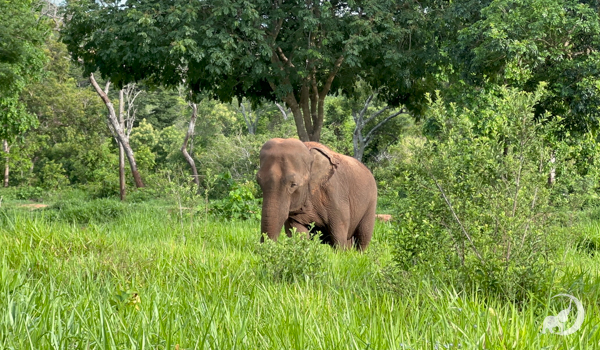
After writing a couple posts lately of Rana and Mara grazing, we’ve received a few questions about the diet that the girls receive here at sanctuary. Today’s EleFact is all about food!
It’s important to share that all of the sanctuary elephants could likely live off of what the sanctuary habitat provides, as far as diet goes. Many of the treats that you see us share with them, like melons, grains, and hay, are supplemental. We provide extra grains, like oats and bran, and produce several times a day – or more if their individual needs require. The produce they get is more of a treat than having a significant nutritional benefit, but it serves a greater purpose in allowing us opportunities to observe subtle changes in behavior or appetite. By watching them eat for even just a few minutes, we can get some clues about any medical issues or teeth/mouth problems that may arise. These meals also allow for the opportunity to deliver their supplements and medications, which are unfortunately needed after decades of inappropriate diet and environment. Their meals are also supplemented with grass hay, which is often necessary because of the geriatric age of our elephants and to help the several very underweight elephants who have arrived at sanctuary, back up to a healthy weight.
One of the delights of sanctuary is being able to provide the elephants with even the smallest of comforts that they’ve never experienced before. Watermelons, papayas, jackfruit, and squash may just be a normal trip down the grocery aisle for us, but those snacks prove to us time and time again how much a small treat can make a big difference to these elephants who are so deserving of joy.
Photo of Mara grazing in Yard 4. She’s surrounded by an impressive amount of greenery.
Comments(6)-

-

-

-

-

-


- PO Box 2426
- Brentwood, TN 37024
- (615) 435-9523
-

-

-

-

-

-

- Ways to Support
- GSE Merchandise
- Privacy & Cookie Policy
Barbara L Smith says
January 2, 2026 at 2:16 pmI can imagine the girls delight receiving the new delicious fruit and veggies.❤️
B says
January 2, 2026 at 4:03 pmAnything more on Pupy and Kenya?
Sara says
January 2, 2026 at 4:10 pmAs we explained in our update post (which you can read here: https://globalelephants.org/what-we-know-so-far-about-pupy-and-kenyas-passing/) the lab doing the sample testing closed for the holidays and we won’t get results until sometime this month, at the very earliest. Since the labs may not have even reopened yet, nothing new has been processed. Necropsies usually take a minimum of 3 months due to the amount of time that cultures must be studied to get accurate information. But, depending on the individual circumstances it can take substantially longer. We’ll post results once we receive all of the data.
Wim says
January 2, 2026 at 4:39 pmThe treats and extra food must also make them feel good, mentally. I can imagine, it’s all for once in their life they are treated with respect. 🙏🐘🍉
Lara Anderson says
January 17, 2026 at 10:54 pmI have seen the girls eat melons and their faces light up, when having delicious fruit snacks.
Fruit such as watermelon provides extra hydration and must taste so delicious. Can the elephants absorb the vitamins that fruit has to offer? I also think it’s wonderful that the treats provide extra observation time. I find it very satisfying seeing my pets eat, and enjoy their food. I enjoy the elephants eating and swaying tails. Precious.
Sara says
January 17, 2026 at 11:44 pmAll of their produce is chosen for their nutritional properties, plus a few treats here and there. Elephants don’t digest a large percentage of their food, which is one of the reasons they eat most of the day. They do get a benefit from it, but it’s only a supplement.
Subscribe to our Blog
Become an EleGuardian
Shop for Eles & Humans
Choose a treat or much-needed item for one of the elephants… or shop for apparel, accessories, and more.
Categories
Archives
Global Sanctuary for Elephants
Stay connected with our herd
MISSION: Protecting, rescuing, and providing sanctuary for elephants worldwide.
Global Sanctuary for Elephants is a 501 (c)(3) tax exempt, public charity status (EIN 46-3564818) and all contributions are tax deductible to the full extent of the law.
© Global Sanctuary for Elephants. All Rights Reserved
Your ticket for the: EleFact Friday: To Graze and To Snack
EleFact Friday: To Graze and To Snack