

 Help take extra special care of an elephant that is close to your heart.


We don’t definitively know the number of elephants who live in captivity around the world, though researchers are doing excellent work on identifying as many as possible. There are an estimated 15,000 to 18,000 captive elephants in the world, with Asian elephants making up the vast majority (around 16,000-17,000) and a smaller number of African elephants (around 1,000) in captivity. These elephants are kept in a variety of places including zoos, sanctuaries, logging camps, and tourism facilities, primarily in their native range countries of Asia.
When we made the decision to open Elephant Sanctuary Brazil, we were aware of several dozen elephants in need of sanctuary across South America, but that number is certainly lower now, due to the aging elephant population and lack of breeding. Although South America has a progressive attitude toward captive elephants and sanctuaries, there are still elephants dispersed throughout the continent in zoos, circuses, and held privately by individuals; unfortunately, the process of freeing them is almost never as simple as just asking someone to send their elephants to sanctuary. While we hope and advocate and educate in the chance that will happen, bringing elephants to a sanctuary home often means years of negotiations and even litigation. But even when it feels like everything is stacked against the process, all the effort is worth it if we can bring a sense of freedom to even one more being.
It’s not uncommon for people to reach out to Global Sanctuary for Elephants anticipating that we can assist an elephant in need, somewhere in the world. We have a widespread network of elephant and animal conservationists who we consult with regularly, and do our best to provide information on how to fight for animals, no matter the species. Because we are located in South America, we can have conversations with our contacts on matters happening elsewhere, but are somewhat limited as to what we ourselves can do. But there are some basic tools and techniques that you can use to be a voice for an animal that might be in harm’s way or in a situation where their basic needs aren’t being met. Here are some of the things that we recommend, if you want to be active in the animal sanctuary movement:
Create a community. If you are concerned about a specific animal or species, spread the word in conversation, on your social media, and to your friends. Understanding of the lives of performing animals is changing and the modern world isn’t as oblivious to animals in peril as it has sometimes been in the past. People may not be aware that an animal is in a dangerous situation, and education can spur action. Plus, it’s heartening to share a common cause with other like-minded people. Take time to celebrate what you love about elephants or the animal in question.
Do some research. There might be organizations already working on initiatives to relocate the animal you are concerned about. Look for a group in the region or the country where the elephant resides to ask if they are involved in the case and, if so, how you can be a part of their efforts. If the elephant is in a zoo, find out if it’s a publicly or privately held zoo. If private, it can be more difficult to convince the owner to relinquish someone who is a source of income, but it’s not impossible. Publicly held zoos are more susceptible to outside pressure. Reach out to them by phone–maybe multiple times– and send a letter (yes, physical ones are impactful) asking about their long-term plans for the elephant, to get a conversation going. They might be open or in talks to find a new home for their elephant, or may be planning to age out their elephant program.
If appropriate, seek out your local representatives. Publicly held zoos are subject to oversight by government agencies. Give your representatives as many details about the situation as you can, and inform them of other zoos or circuses who are phasing out their programs to show them a practical solution exists. Though there is sometimes a language barrier to navigate if the animal and zoo are located in a foreign country, this process can be effective all over the world; perhaps there are initiatives in the works like those we see in Argentina, where there are no longer any elephants in captivity. If you see an elephant being harmed or put in immediate danger, government agents on the ground can be a good resource. For instance, there may be an agency that oversees care and treatment of animals, including wild and exotics. Here in Brazil, an individual may file a complaint with the veterinary board, who will then investigate.
Go grassroots. It may seem counterintuitive, but smaller, more community-based groups have historically made a huge difference when proposing change. Larger institutions usually have widespread reach, which helps when spreading awareness, but their outreach may not be as effective on the ground as you can be. Communities are often more open to conversations with people living within the region, who are most invested in finding a solution, than they are large organizations who might seem like they are coming into a town and trying to impose change without a foothold with the folks who live there. When your neighbors and constituents care and speak up, that often goes a long way. And don’t stop there: if no organization exists that can help you, start your own; organize or attend protests and town halls. Be a voice for the voiceless.
Use your knowledge. Don’t attend circuses with performing animals or visit sanctuaries who welcome visitors on a regular basis. Avoid activities like riding or bathing elephants, which take away an elephant’s ability to choose what they do–and could be actively harming them. It might seem like fun to be close to an elephant, but that soap you’re using to lather them might just dry out or irritate their skin, and elephant bodies are not well-suited for carrying humans; doing so can cause irreparable physical damage and constant pain. Sadly, maintaining control of elephants who repeatedly interact with humans can be directly traced back to abusive and dominant practices used to “keep them in line.” Just because you see pretty pictures on social media does not mean that the animal isn’t being abused behind the scenes, in order to get them to behave as the human wishes.
Don’t shame people for past actions. Efforts for change are better if they’re as inclusive as they can reasonably be. Just because in the past, people have visited zoos to see elephants or attended a circus show with performing animals doesn’t mean they are bad. Anyone can change their hearts and minds at any time, and they might not have understood how their actions could have inadvertently supported people with unclear motives. People who learn and change can sometimes be the loudest voices in the room, because passion can come from experience.
Help reputable organizations who work on the ground find funding. If there’s one thing we know from experience, it’s that without our sanctuary family, we wouldn’t have been able to bring the elephants who thrive at Elephant Sanctuary Brazil home. Check out charity ratings and an organization’s 990 before you make a donation to make sure your money is going somewhere it’ll be effectively used. If you believe a sanctuary might be the right place for an animal in need, find out if that sanctuary is non-profit and accredited. (For instance, Global Sanctuary for Elephants is one of only three elephant sanctuaries in the world accredited by The Global Federation of Animal Sanctuaries.) Many places advertise themselves as being true sanctuaries, but don’t necessarily have ethical practices when it comes to elephant care. Start Facebook fundraisers or investigate some form of planned giving. You’d be surprised at how small donations add up and can make a huge difference.
Keep up the good work. Sometimes it feels overwhelming to advocate for animals, like the problem is too big and the steps you have to take might seem too hard. But people with empathetic spirits and open hearts can break through cynical barriers, and wind up changing lives for the better.
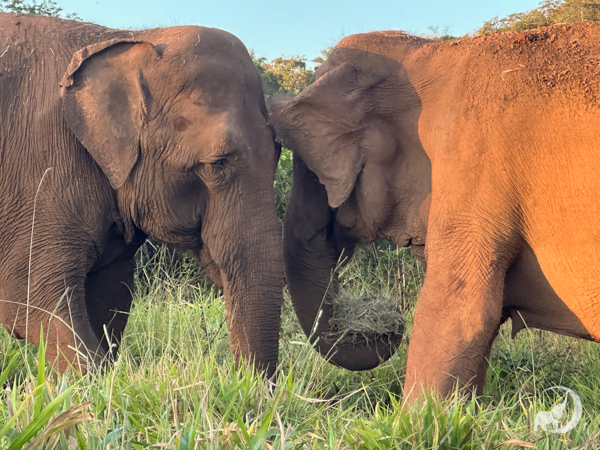
Photo of Mara (left) facing Rana (right) while Rana snacks on some hay
Comments(14)-

-

-

-

-

-

-

-

-

-

-

-

-

-


- PO Box 2426
- Brentwood, TN 37024
- (615) 435-9523
-

-

-

-

-

-

- Ways to Support
- GSE Merchandise
- Privacy & Cookie Policy
Title
USD
Kenneth B. Newman says
October 27, 2025 at 3:28 pmthe information in this piece was excellent. However, as I asked several weeks ago, are there still numerous Elephants in captivity left in the countries of South America? You said that Argentina was NOW elephant free for any captive elephants. So between the other 12 countries left on this continent, does GSE have a list and a count of those captive elephants? Guyana, Suriname, Brazil, Paraguay, Uruguay, Peru, Columbia, Chile, Ecuador, Venezuela, ,Bolivia, French Guyane……
Sara says
October 27, 2025 at 3:38 pmThere is no confirmed list of captive elephants in South America. As we mention in the post, some we may have learned of in the past might now have passed away and others are currently in the works. There is a database that’s updating data as they get it: https://www.elephant.se/country.php
Jeanine says
October 27, 2025 at 4:26 pmThank you. This is encouraging. There is an elephant in the Edmonton Zoo named Lucy. She has lots of people trying to get her to a sanctuary. I sign petitions etc. and contact the City of Edmonton mayor etc. all the time. I hope it helps. I sign countless other petitions and contact people all the time in Canada. I’m sure they get tired of me. I don’t care.
Sara says
October 27, 2025 at 4:30 pmLucy’s struggle has been a long one and it sometimes seems like the challenge is insurmountable. But as long as we use our voices, there will always be someone speaking for her. Thank you for your efforts!
Gregory Graham says
October 28, 2025 at 6:48 pmDoes Lucy have any way to stay warm? That weather in Edmonton I would think is way too cold for her.
Sara says
October 28, 2025 at 7:16 pmWe don’t know if she has a heater. You could probably research that. But we know it gets cold and icy there.
Wim says
October 27, 2025 at 4:33 pmThank you, for giving a lot of answers and scenarios. However i’ve been following the fate of elephants in Asia and Africa for many years. Apart from the situations you describe above, there are many casualties caused by loss of habitat and illegal building. I also think of hunting trips payed by the rich, in these places elephants don’t stand a ghost of a chance.
Sara says
October 27, 2025 at 5:14 pmIt’s a devastating situation and one that’s often overlooked by people because of money (not surprising). But we can’t stop fighting for them! Thank you for all of your years of support for the elephants.
Terry Silva says
October 27, 2025 at 5:12 pmGSE 💜🩵
Elizabeth says
October 27, 2025 at 6:04 pmI am so, so happy you put out this message. I just emailed you, as I didn’t want to violate any rules here but I am trying to get a grassroots group together.
If you feel it is appropriate, please share my contact info.
Sara says
October 27, 2025 at 6:14 pmWonderful! If you’re not already a part of this group, Friends of GSE, they are a great resource: https://www.facebook.com/share/g/1MNnukpBvj/
Ada says
October 27, 2025 at 6:36 pmThe most I do is donate, not go to zoos, and circuses are a definite No. I used to, but as I’ve grown older and getting knowledgeable about how these beautiful animals are captured and kept…I cannot support zoos, circuses or treated as tourist attractions…NOPE!
Susan shipman says
October 28, 2025 at 9:58 amThanks for printing this out. The new way of being able to read this with the x etc doesn’t let me get through and I am very interested in the elephant news, make donations etc.
Gregory Graham says
October 28, 2025 at 6:39 pmI love elephants more than you can imagine. I am broken over what they endure at the hands of humans
Subscribe to our Blog
Become an EleGuardian
Shop for Eles & Humans
Choose a treat or much-needed item for one of the elephants… or shop for apparel, accessories, and more.
Categories
Archives
Global Sanctuary for Elephants
Stay connected with our herd
MISSION: Protecting, rescuing, and providing sanctuary for elephants worldwide.
Global Sanctuary for Elephants is a 501 (c)(3) tax exempt, public charity status (EIN 46-3564818) and all contributions are tax deductible to the full extent of the law.
© Global Sanctuary for Elephants. All Rights Reserved
Your ticket for the: You Ask, We Answer: What Can You Do To Help?
You Ask, We Answer: What Can You Do To Help?